Get the Right Care
Community Involvement
How Long Does a Colonoscopy Take? Everything You Need to Know About Colonoscopies, Explained
Screening saves lives. Few procedures demonstrate that truth as clearly as colonoscopy. A 2022 randomized study published in the New England Journal of Medicine followed more than 84,000 adults aged 55 to 64 and found that those invited to undergo a screening colonoscopy had a lower risk of developing colorectal cancer over ten years than those who were not invited to undergo screening (NEJM, 2022).
That finding confirms what experienced gastroenterologists have seen for decades: early detection lowers the risk of developing cancer later on down the line. Still, many people hesitate because of anxiety about the preparation, uncertainty about how long the procedure takes, or confusion about what recovery involves. This guide was written to make things clear. It is meant for anyone preparing for a colonoscopy or simply trying to understand what this screening test entails.
A colonoscopy allows your doctor to view the entire colon (large intestine) and rectum using a thin, flexible tube equipped with a small camera at the end. This simple procedure helps identify and remove colon polyps or other abnormal growths before they turn into colon cancer. It can also reveal inflammation, ulcers, or bleeding that may be linked to inflammatory bowel disease or other conditions.
A colonoscopy is used for both diagnosis and prevention. For people with a family history of colorectal cancer, rectal bleeding, abdominal pain, or unexplained changes in bowel habits, it provides essential information about the internal structure of the gastrointestinal (GI) tract that no other test can match.
The colonoscopy procedure itself usually lasts between 15 and 60 minutes, depending on a few variables, including preparation, sedation, and observation afterward. Most patients should expect to be at the clinic for about two to three hours in total.
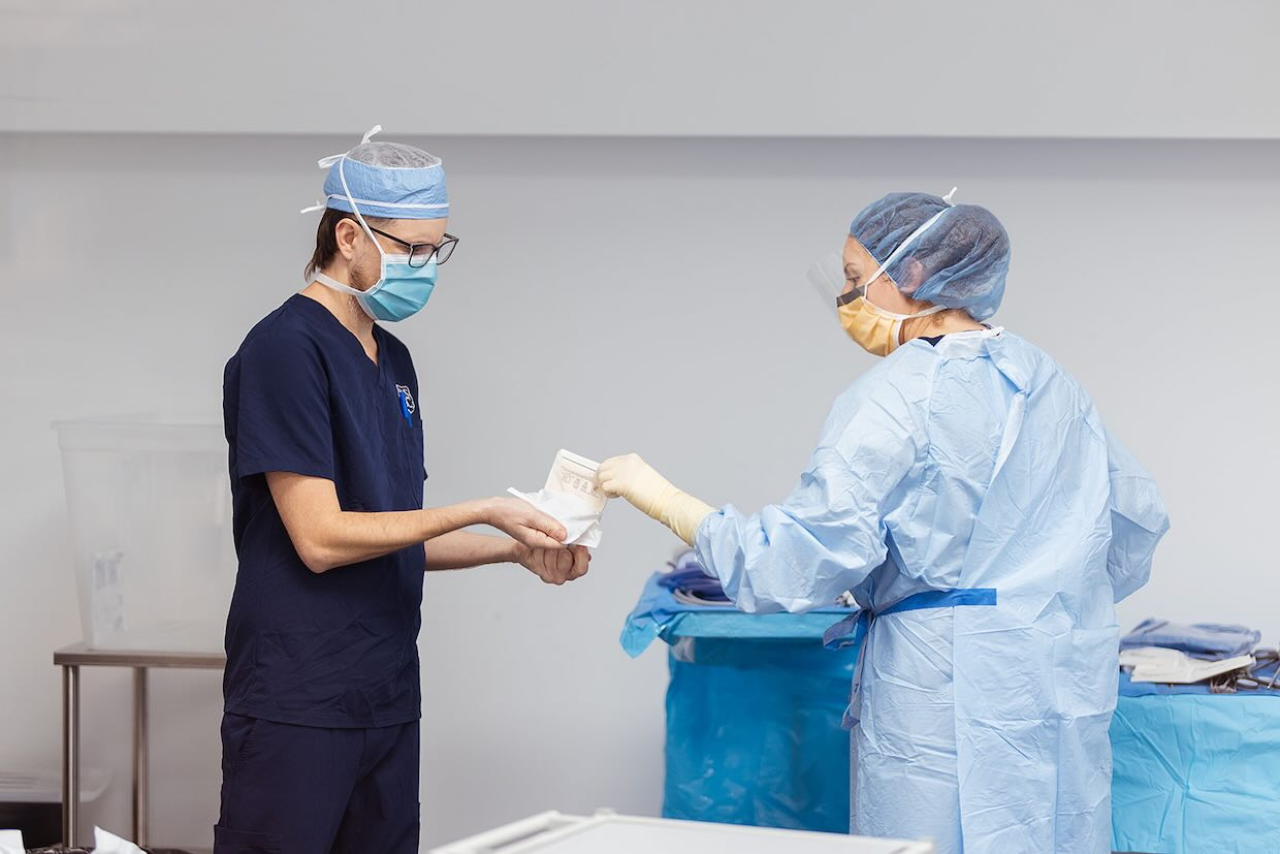
Before the test begins, your care team will check your blood pressure and other vital signs. Sedation is administered. Sedation can either involve monitored anesthesia care or moderate sedation, depending on your needs. At Clinique Michel Gagner, the anesthesiologist and your surgeon oversee this process to ensure safety and comfort.
You’ll lie comfortably on your left side while the doctor carefully advances the scope through the colon. Air or carbon dioxide is gently introduced to open the walls of the intestine for better visibility. If abnormal tissue or colon polyps are found, they can often be removed for analysis. The ability to both detect and treat during the same procedure is one of the greatest advantages of this test.
Good preparation is key to a successful colonoscopy. When the bowel isn’t fully cleaned, visibility is limited and the procedure may need to be repeated.
Starting five days before your appointment, avoid foods that can leave residue in the colon, including:
Whole grains, nuts, seeds, and popcorn
Raw fruits and vegetables, especially those with skins or small seeds
Red meat and fibrous foods that are slow to digest
Before the procedure, switch to foods that are easy on the digestive system:white rice, pasta, eggs, and cooked or peeled vegetables. Two days before, your doctor may ask you to move to a low-residue or clear-liquid diet.
The day before the procedure, you’ll begin your bowel preparation, usually a prescribed laxative solution designed to completely empty the colon. During this time, stick to clear fluids only: water, broth, apple juice, sports drinks, or gelatin. Avoid alcohol, milk, and anything with pulp.
On arrival, the care team will review your medical history and confirm that your bowel preparation worked as expected. You’ll change into a gown and have an IV started for sedation.
Once you’re relaxed, your doctor begins the exam.
Patients will be rolled onto their left side or back on the operating table. The colonoscope will then be slowly inserted into the rectum and slowly advanced along the inside of your colon. Once the end of the colon (the cecum) is reached, the colonoscope will slowly be withdrawn. While this is occurring, your doctor will be carefully examining the lining of your colon on a separate screen.
Throughout the test, your vital signs are continuously monitored.
When the exam is complete, you’ll spend time in recovery while the sedation wears off. Someone should accompany you home since the sedative can linger for several hours.
Most people can resume a normal diet within 24 hours, with the exception of those who have been advised to follow specific dietary instructions. For instance, those who have undergone polyp removal may be given specific dietary restrictions to follow.
Passing gas is common for a few hours after the exam. Mild abdominal pain or cramping may occur but usually resolves after the first bowel movement.
Mild soreness may persist for a few days, especially if tissue samples were taken, but most patients feel back to normal within 24–48 hours. If you experience persistent abdominal pain beyond that time frame, contact your physician.
Colonoscopy is considered extremely safe, but no procedure is entirely without risk. Complications are rare and usually minor. Possible risks include:
Bleeding, particularly if a biopsy is taken or a polyp is removed
Abdominal pain or swelling that persists longer than expected
Perforation (a small tear in the colon wall)
Temporary drowsiness from sedation
Average-risk adults should have a colonoscopy every 10 years, beginning at age 40 to 50 depending on the risk-factors of the individual.
If colon polyps are discovered and removed, your physician may recommend repeating the test every 3 to 5 years.
For individuals with family history, inflammatory bowel disease, or prior abnormal findings, your schedule will be customized.
Your doctor may also discuss other screening options, such as stool-based tests or virtual colonoscopy, but standard colonoscopy remains the most comprehensive and preventive form of colorectal cancer screening.
Detecting and removing polyps before they become cancerous has saved countless lives.
At Clinique Michel Gagner, patients receive clear surgery guidelines, evidence-based advice, and personal support throughout the process.
If you’ve been advised to schedule a colonoscopy, or if you’re simply ready to take a proactive step toward prevention, contact us today to get started. Your health and peace of mind are worth it.
Your health should always come first; financial considerations shouldn’t stop anyone from accessing high-quality medical care.
If cost is a concern, we invite you to speak with our administrative team. We can walk you through practical options for financing.
Our goal is to make sure you feel informed, supported, and empowered to make the best decision for your health. Reach out today to start the discussion. Together, we’ll find a way forward that works for you.
Bretthauer, M., et al. (2022). Effect of colonoscopy screening on risks of colorectal cancer and related death. New England Journal of Medicine, 387(17), 1547–1556. https://www.nejm.org/doi/10.1056/NEJMoa2208375
Canadian Cancer Society. (2024). Colonoscopy. Retrieved from https://cancer.ca/en/treatments/tests-and-procedures/colonoscopy
Cleveland Clinic. (2024). Colonoscopy. Retrieved from https://my.clevelandclinic.org/health/diagnostics/4949-colonoscopy
Mayo Clinic. (2024). Colonoscopy. Retrieved from https://www.mayoclinic.org/tests-procedures/colonoscopy/about/pac-20393569
UCLA Health. (2024). What to expect on the day of your colonoscopy. Retrieved from https://www.uclahealth.org/medical-services/gastro/colon-cancer-screening/preparing-colonoscopy/what-expect-day-your-colonoscopy
Canadian Digestive Health Foundation. (2024). What is a colonoscopy and how to prepare for one. Retrieved from https://cdhf.ca/en/what-is-a-colonoscopy-how-to-prepare-for-one/
Colorectal Cancer Alliance. (2024). How long does a colonoscopy take? Retrieved from https://colorectalcancer.org/screening-prevention/colonoscopy-prep-tips/how-long-does-colonoscopy-take